The Texas Motorcycle Law Guide: Do You Need Mirrors?
Table of Contents
- Equipment Requirements: Mirrors, Lights, Horns, and More
- Lights, Lamps, Reflectors
- Horn, Exhaust, Brakes, Tires, and Other Basics
- Licensing and Inspection Requirements
- Safety Inspections & 2025 Changes
- Passengers, Helmets, and What You Need for Two-Up Riding
- Lane Splitting & No-Chase Laws in Texas
- Where Can You Park Your Motorcycle in Texas?
- Texas Motorcycle Laws Conclusion
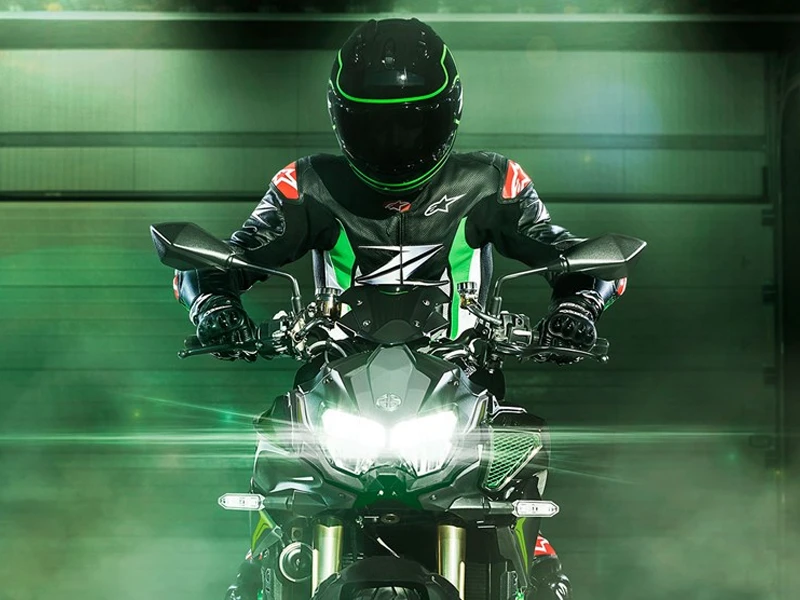
Riding a motorcycle in Texas comes with freedom, but also responsibility. If you’re riding through the Lone Star State (or thinking about it), it’s smart to understand exactly what the law demands. This guide runs through the basic Texas motorcycle laws: required equipment (mirrors, lamps, horn, etc.), licensing and passenger rules, whether there’s a “no-chase” or “no-lane-splitting” rule, and where you are allowed to park your motorcycle in Texas.
Equipment Requirements: Mirrors, Lights, Horns, and More
Mirrors:
- Under Texas Transportation Code 547.602, a motor vehicle must be equipped with a mirror that lets the driver see at least 200 feet behind.
- For motorcycles and motor-driven cycles, having a mirror is part of the standard required equipment.
- While the statute refers generally to “motor vehicles”, the requirement for a rear-vision mirror applies to motorcycles under the state equipment laws.
In short: yes, you need at least one mirror on a street-legal motorcycle. Some riders argue that two mirrors (one on each side) is safer, and many manuals advocate for a mirror on each side for better rear visibility.
Lights, Lamps, Reflectors
Under Texas Transportation Code 547.801 and related sections, a street-legal motorcycle must have:
- At least one headlamp, mounted at a height between 24 and 54 inches.
- At least one taillamp, between 20 and 72 inches high.
- A lamp (or the same tail lamp) that illuminates the rear license plate so the plate is clearly visible from 50 feet away at night.
- A stop lamp (brake light) that meets the requirements of the general stop lamp statute.
- A rear red reflector, mounted per reflector specifications (through one reflector may be integrated into the taillamp).
Additionally:
- For motorcycles with engine displacement over 250c (or for typical motorcycles), lighting must include multi-beam headlamps with both upper and lower distributions. The upper beam should reveal a person/vehicle at 300 feet; the low beam should reveal at least 150 feet ahead.
- For smaller motor-driven cycles (equal to or smaller than 250cc), a single-beam setup is allowed-but it must still meet certain minimum visibility distances depending on speed.
- Finally, a motorcycle cannot be operated unless at least one headlamp is illuminated.
Bottom line: lights and reflectors are non-negotiable for safe, legal riding in Texas.
Horn, Exhaust, Brakes, Tires, and Other Basics
Texas law also requires that your motorcycle:
- Have a working horn, capable of producing a sound audible from 200 feet away (but not unreasonably loud or a harsh whistle).
- Have a functional exhaust/muffler system (i.e., no muffler cutouts or bypasses).
- Have operational brakes, a stable steering system, good tires and wheels, and a vehicle identification Number (VIN).
These elements reflect that while you might not get a state inspection sticker anymore (see below), the law still mandates that motorcycles be properly equipped and maintained.
Licensing and Inspection Requirements
Motorcycle License In Texas
To ride a motorcycle on public roads in Texas, you must hold a valid motorcycle license (Class M) or the appropriate motorcycle endorsement. You must also meet all requirements that apply to standard driver licensing. For new residents who already hold a motorcycle license from another state, Texas may allow that license to satisfy licensing requirements if it’s valid.
Safety Inspections & 2025 Changes
Historically, motorcycles (like cars) had to pass an annual safety inspection—verifying horns, lights, mirrors, brakes, VIN, etc. But that has changed recently. Under House Bill 3297, as of January 1, 2025, statewide mandatory safety inspections for non-commercial vehicles (including motorcycles) have been eliminated.
Instead, a small “Inspection Program Replacement Fee” is required at registration:
- $7.50 annually for existing vehicles,
- $16.75 initially for new vehicles (covering the first two years) before reverting to $7.50.
Important caveat: Removing the inspection does NOT remove the equipment and safety requirements. Your motorcycle must still legally have all required lights, horn, mirror, brakes, etc. If you’re stopped by law enforcement and your bike fails to meet the legal requirement, you can still be cited.
Also, if you live in one of the Texas counties that require emissions testing, those emissions requirements may still apply, though in most counties, motorcycles aren't subject to emissions testing.
Passengers, Helmets, and What You Need for Two-Up Riding
Texas law places specific requirements on passenger riders as well as the motorcycle itself:
- The motorcycle must have a permanent passenger seat (not a makeshift seat or pad) to legally carry a passenger.
- There must also be footrests and handholds for the passenger to ride safely (though the exact handhold requirement may depend on the design).
- Helmet laws apply. Under the rules from the Texas Department of Public Safety (DPS), helmets meeting the federal standard (FMVSS-218) are required for all motorcycle operators and passengers, unless the rider is 21 or older and has either completed a state-approved motorcycle operator training course or carries medical insurance coverage.
- Under-21 riders (and their passengers) must wear helmets regardless.
You can carry a passenger, but only if the bike is properly equipped and both riders follow helmet laws (or meet the exemption requirements).
Lane Splitting & No-Chase Laws in Texas
You may have heard of “lane splitting”, “lane filtering”, or “no chase” laws. What do these terms mean, and does Texas allow them?
- Lane splitting (or filtering) refers to riding a motorcycle between lanes of slow or stopped traffic, usually between cars.
- As of 2023, under House Bill 4122, Texas explicitly outlaws lane splitting and lane filtering.
- This means you may not legally ride your motorcycle between lanes of moving or stopped traffic. Doing so can result in a fine (commonly around $175) and, if dangerous, possibly a reckless driving charge.
- What you can do: riders are allowed to ride side-by-side with another motorcycle in a single traffic lane, as long as it doesn’t impede traffic. This is called lane sharing, which is legal.
As for a “no-chase” law, this typically refers to law enforcement being prohibited from chasing down motorcycles, and there is no statewide law like that in Texas. Law enforcement can follow and “chase” motorcycles if they deem it necessary.
Where Can You Park Your Motorcycle in Texas?
Under Texas law, motorcycles generally must follow the same parking rules as other vehicles, and in many cases, more strict ones. Motorcycles are prohibited from parking or stopping in handicapped-parking spaces unless they display a valid disabled-person placard or license plate. You also must avoid striped access areas (such as those beside handicap spaces or in front of business entrances), sidewalks, or other pedestrian walkways. Parking a motorcycle on a public sidewalk, median, or street shoulder (unless explicitly permitted by signage) is likewise not allowed. When parking on the street, motorcycles are typically expected to park upright and within designated parking spaces, not leaning against buildings or blocking pedestrian paths.
Texas Motorcycle Laws Conclusion
Yes, under Texas law, a mirror is required on a motorcycle. But it’s just one part of a border set of equipment mandates: lights, horn, reflector, brake light, license-plate lamp, muffler/exhaust, tires, brakes, appropriate seat and footrests for passengers, and more. Even though the state no longer mandates an annual inspection for most non-commercial motorcycles (as of 2025), the legal requirement to maintain safe, functioning equipment remains.
Additionally, some maneuvers, like lane splitting or lane filtering, are now explicitly prohibited statewide under the 1023 law change. So don’t count on being able to weave between traffic just because you’ve done it before.
If you’re not sure your motorcycle is compliant, come see us at Tipton Motorsports. We stay up to date on current Texas motorcycle equipment requirements, and our technicians can help you verify that your motorcycle meets all the safety-equipment rules. We can also advise on safe upgrades that may help you avoid hassle or legal trouble later. Stop by and see us today!